Recycling & Sustainability — Lawn Mowing Hayes
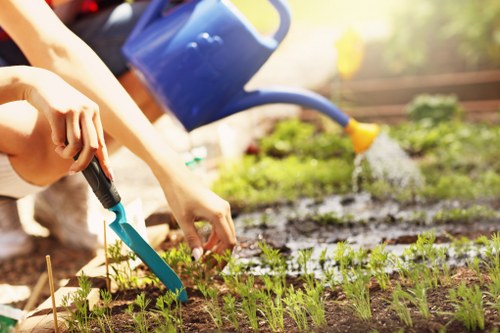 At Lawn Mowing Hayes we place sustainability at the core of every lawncare and garden clearance task. Our Hayes lawn mowing and garden maintenance teams work to reduce waste, increase recycling and support local circular-economy initiatives. We balance efficient mowing and tidy borders with environmental responsibility, ensuring every grass clipping and hedge trimmings are handled in ways that benefit the community and the planet. Our approach combines practical on-the-ground services with measurable sustainability targets.
We use best-practice waste separation on-site to complement the boroughs' approach to waste separation in Hillingdon and neighbouring areas — encouraging clients to separate food waste, garden material, plastics and glass where possible. By aligning with local recycling practices we make sure materials are taken to the correct facilities and avoid contamination that would otherwise send recyclable materials to landfill.
 Targets and commitments: we have set a clear recycling percentage target for our operations and partners. Our immediate goal is a 75% recycling rate for all materials collected from residential and commercial gardens within 12 months, with a longer term aspiration to achieve a 85%+ diversion of organic green waste to composting and anaerobic digestion. These targets are monitored quarterly and published in our sustainability summaries.
Practical recycling routes and local transfer stations
We work closely with local transfer stations and civic amenity sites around Hayes and the wider Hillingdon borough to ensure collected garden waste and recyclables follow the most efficient, low-impact route out of the neighbourhood. Where possible we use borough transfer facilities and authorised neighbourhood depots to minimise travel distances and handling. This pragmatic approach reduces vehicle mileage, decreases the risk of cross-contamination and ensures that compostable material reaches licensed composting or AD facilities quickly.
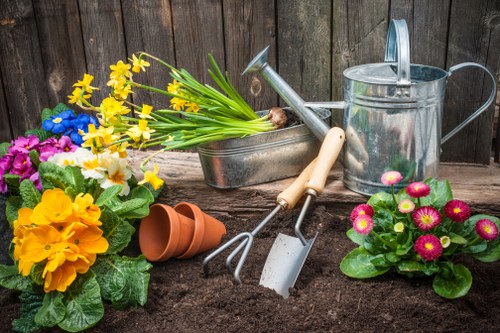 To support borough recycling plans — which typically separate food waste, garden waste and mixed dry recyclables — our crews pre-sort materials during collection. Leaves, grass cuttings and woody prunings are segregated for composting; recyclable plastics and paper are held separate for local processing; and any non-recyclable residue is minimised through reuse or recovery options.
We also provide clear information to clients about how Hayes mowing and garden waste fits into the borough-level system so that householders and businesses can act in concert with our teams. Simple alignment between customer sorting and our collection practices greatly increases the rate of successful recycling.
Low-carbon fleet, partnerships and reuse
Our fleet strategy emphasises low-emission transport. We operate a mix of electric vans, hybrids and low-emission vehicles designed for urban access and minimal carbon footprint during jobs across Hayes. The move to electric cargo vans and smaller fleet vehicles reduces particulate emissions in residential streets and helps us meet city-wide air quality goals. Where terrain and load permit we utilise battery-electric vans and efficient route-planning to reduce fuel consumption.
Partnerships are central to our reuse and donation model. We partner with local charities and community projects — including community gardens and reuse hubs — to redistribute suitable items and surplus plants. Through these collaborations we support neighbourhood greening projects and social enterprises, diverting usable materials from the waste stream and creating positive social impact.
Key areas of collaboration include:
- Donating potted plants, salvaged shrubs and soil conditioners to community gardens and local charity groups.
- Working with reuse hubs to pass on garden furniture or planters in good condition rather than disposing of them.
- Supplying composted green waste back to community allotments and landscape projects where permitted.
 Our sustainable rubbish gardening area principles are simple, measurable and replicable: reduce travel miles, maximise on-site separation, prioritise reuse, and ensure organic waste is managed as a resource. This means designing job workflows that minimise cross-contamination of recyclables and favour local processing routes. We audit job waste streams to identify opportunities for further reduce, reuse and recycle actions.
To support community-level recycling ambitions in Hayes, Lawn Mowing Hayes provides training to staff on correct sorting protocols aligned with the boroughs' waste collection guidance (food caddies, garden waste, mixed recycling). This internal training helps maintain a high standard of segregation so the materials we collect are accepted by local transfer stations and treatment facilities.
 Our commitments include a public-facing sustainability statement and an operational checklist that emphasizes: minimising landfill, increasing composting of green waste, partnering with charitable organisations, and maintaining a low-carbon fleet. We continue to refine these actions to move toward our long-term environmental goals while delivering reliable Hayes lawncare services.
We measure success not only by tidy lawns but by the volume of materials kept out of landfill and the social value created through our partnerships. Progress is tracked annually against the recycling percentage target and operational metrics such as vehicle miles reduced and quantity of organics sent for composting. Transparency and measurable outcomes help the whole community understand how routine lawn maintenance contributes to a healthier local environment.
Finally, Lawn Mowing Hayes recognises that sustainable gardening and rubbish recycling are evolving areas — and we are committed to continuous improvement. By aligning our Hayes lawn mowing service with borough recycling schemes, local transfer station networks and charity partners, we work to create a resilient, low-carbon model for garden care in the area.
We welcome opportunities to work with community groups and other local partners to expand reuse networks and support circular gardening projects that keep valuable resources in use and out of the waste stream.